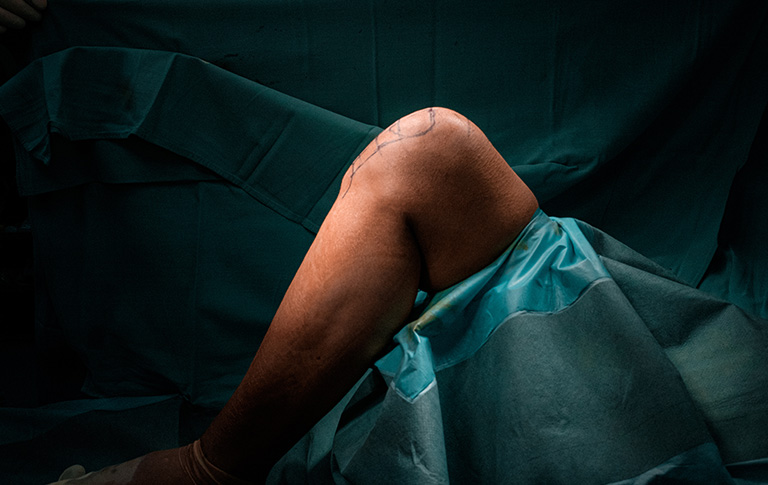

Robotic knee replacement surgery is an advanced surgical technique that significantly enhances precision and customisation in knee joint replacements. Dr David Kerr utilises this technology to deliver accurate results tailored specifically to each patient’s unique anatomy.
Robotic knee replacement involves using computer-guided, robotic technology to assist the surgeon during knee joint replacement procedures. This innovative method offers highly accurate, patient-specific surgical planning and execution, thereby enhancing overall surgical outcomes.
Dr Kerr also specialises in treating a range of sports-related knee injuries, ensuring rapid assessment, personalised care, and optimal recovery pathways.
Meniscal Surgery: Minimally invasive surgery to repair damaged cartilage (meniscus) in the knee joint.
Knee Arthroscopy: A minimally invasive surgical procedure to diagnose and treat various knee problems with faster recovery times and less discomfort.
An cartilage preservation is a realignment surgical procedure used to relieve pain in patients with early-stage arthritis or alignment issues. By shifting weight-bearing forces to healthier parts of the knee, osteotomy helps delay or avoid the need for knee replacement surgery.
Ideal candidates for knee surgery typically experience significant knee pain, mobility issues, instability, or arthritis not adequately managed by non-surgical treatments such as physiotherapy, medications, or injections.
Recovery after knee surgery varies depending on the specific procedure performed. Generally, most patients begin rehabilitation exercises immediately and return to daily activities within 4-6 weeks. Full recovery may take 3-6 months, depending on the surgical technique and patient health.
While knee surgery is highly effective, some potential risks include infection, blood clots, nerve injury, stiffness, or prosthesis-related issues. Dr Kerr thoroughly discusses all potential risks during your consultation.